The oldest stories were told to connect people: to each other, to a place, to a way of life or social structure. Poets of former times weren’t simply artists or peddlers for those with leisure time. Poets were kept close to political and military leaders, as chroniclers. Poets followed their king into battle. Often theirs are the only records available for understanding how events unfolded centuries later. So poetry continues to connect us to place, in time and geography.
I’m weeks into Heaf and beginning to wonder whether connection is separable from storytelling.
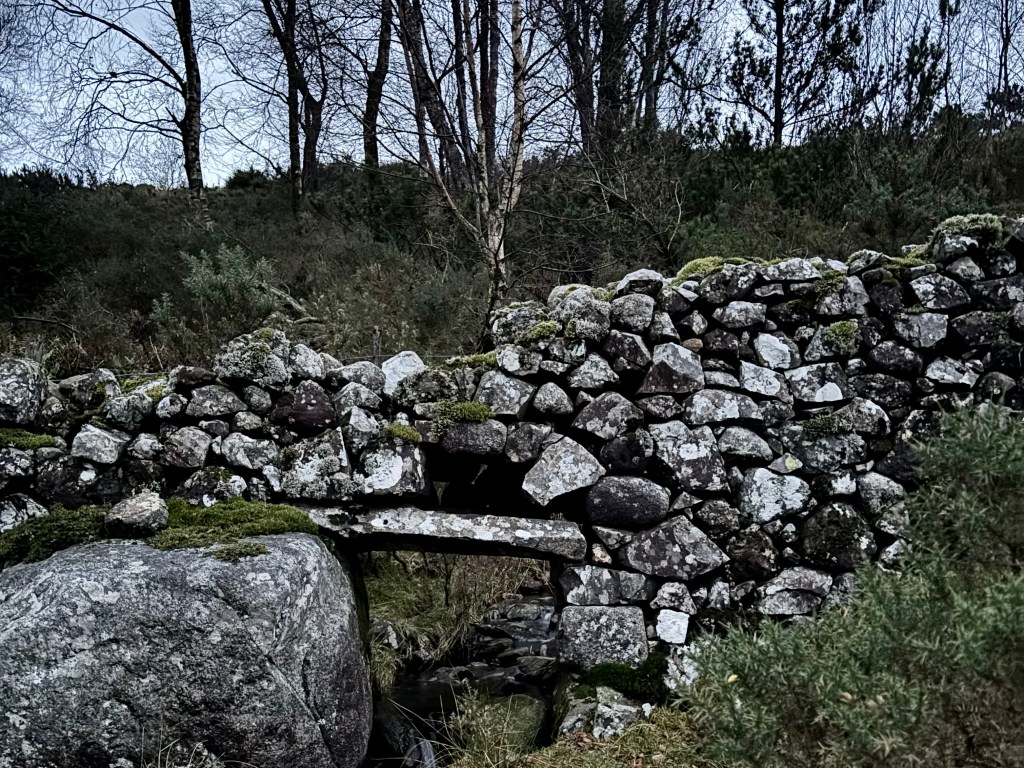
I hear the story of how a farmer had the blue paint of Muncaster removed from the farmhouse window frames the day he took over. Another of a soldier with one lame leg who came to convalesce in the valley and never left. I’m due to speak to his son who is eighty and keen. Another man stops while I’m drinking tea, back against a dry stone wall to tell me about the day he built that wall. I hear city folk tearing down gates; I hear about a lawn black with migrating geese.
Every story is a filament that connects its teller to the valley. As a receiver of stories, am I becoming more deeply connected to Eskdale? To the landscapes of Eskdale, I think so as my view of the various segments of the valley becomes punctuated by these stories, by awareness of what has happened in these places. A layer that both sits apart and within my own experience of those places.
Connection as storytelling needs to be explored.
I plan to start with the youngest participants in Heaf—key stage two children attending the tiny valley school. Together we’ll explore Eskdale through their stories, plotting memories on a map of the river and its watershed. Gradually, in subsequent sessions, we can dive deeper into individual memories to identify sensations and emotions, other characters and how the location might be more than just a backdrop. That is when memories become stories and I can draw out what forms of connection exist among the group.
Perhaps removing the term ‘connection’ and instead talking about stories and memories will make the project more accessible to a wider range of participants? Perhaps it is my work to identify a sense of connection from the stories I am given?

 Melissa Davies
Leave a comment